When creating clean borders between lawns, gravel driveways, and flower beds, choosing the right material makes all the difference. For decades, treated timber has been the default DIY option in New Zealand. However, as
high-grade steel edging has become widely available across the country, more home gardeners and professional landscapers are making the switch.
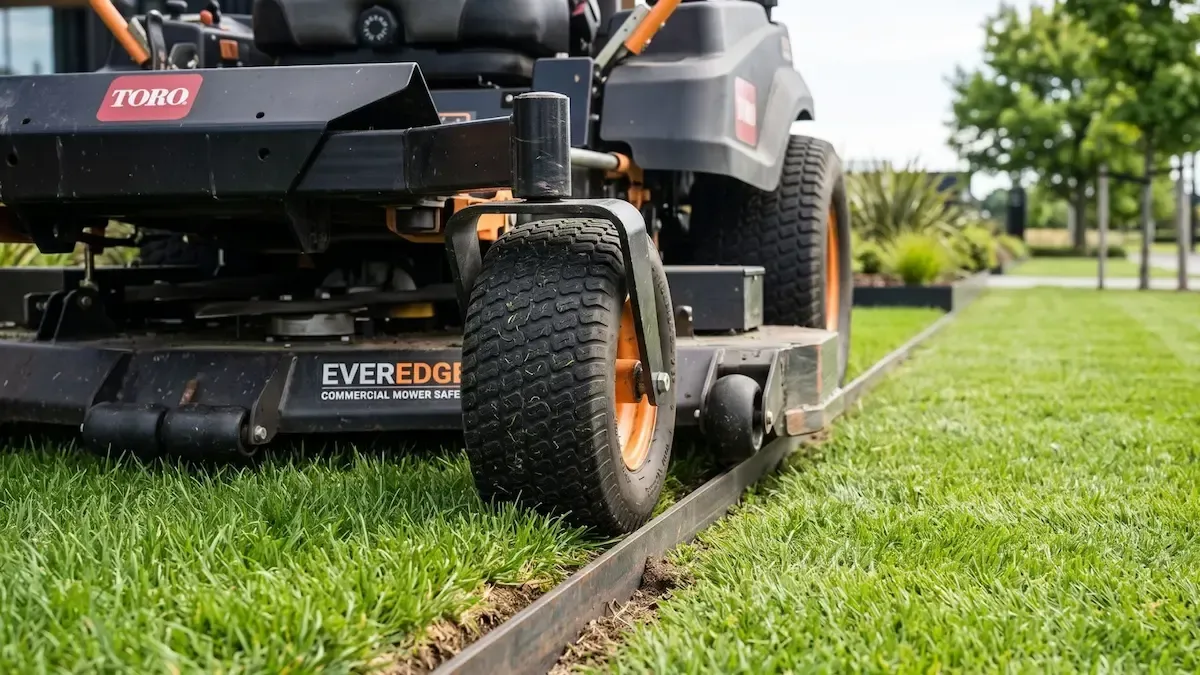
Understanding how these two materials handle damp Kiwi winters, baking summer heat, and constant lawnmower blades is essential before investing your weekend and hard-earned money into a landscaping project. Here is a clear breakdown of how timber and steel stack up in real-world NZ garden conditions.
The Battle For NZ Backyards: Why Garden Edging Material Matters
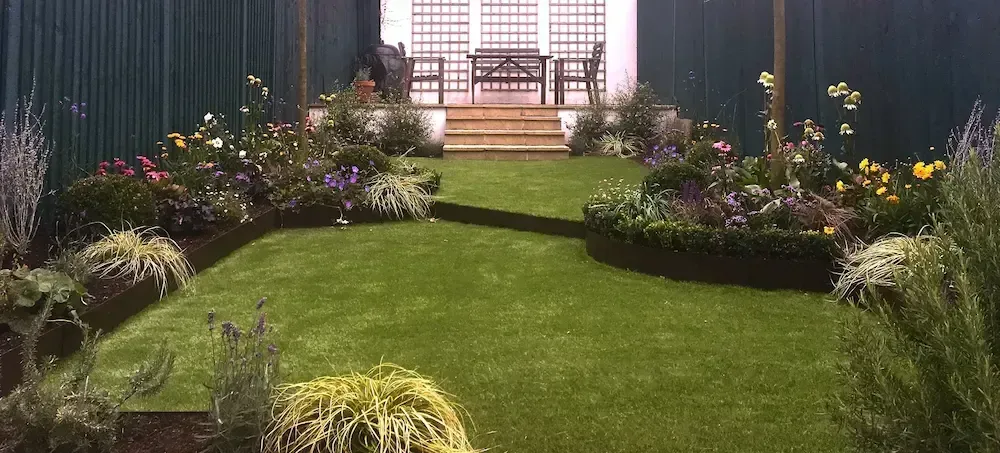
Garden edging serves a crucial practical purpose: it keeps lawn turf from creeping into your flower beds and stops bark or gravel from washing onto your grass. Beyond utility, neat garden borders define the structure of your landscape, giving your entire property a polished, well-maintained look.
While timber feels like a familiar, traditional choice, New Zealand’s high rainfall, UV exposure, and damp soil create a brutal environment for buried wood. Steel edging, on the other hand, provides a slimline structural barrier built to endure the elements without deteriorating.
Durability In Damp Kiwi Soil: Rot, Rust, And Ground Contact
How Treated Timber Fares In Soil Moisture Over Time
Most timber garden edging sold in New Zealand is H3.2 or H4 copper chrome arsenate (CCA) treated radiata pine. While these chemical treatments delay rot, wood in constant contact with moist earth inevitably absorbs ground water.
Over a 3 to 7-year period, damp timber undergoes a continuous freeze-thaw and wet-dry cycle. This leads to:
- Warping and twisting: As the wood dries out after heavy rain, timber lengths pull away from their stakes, opening up gaps for grass roots.
- Internal rot and decay: Fungal decay breaks down the wood fiber from the underside up, making the timber soft and spongy.
- Splitting and splintering: String trimmers (weed eaters) quickly strip away the outer surface, accelerating moisture absorption.
How Steel Handles NZ Rain, UV, And Ground Contact
High-grade steel edging is specifically engineered for permanent subterranean installation.
- Galvanised Steel: Coated in a durable zinc layer that prevents oxidisation and rust, even in wet clay or acidic soils.
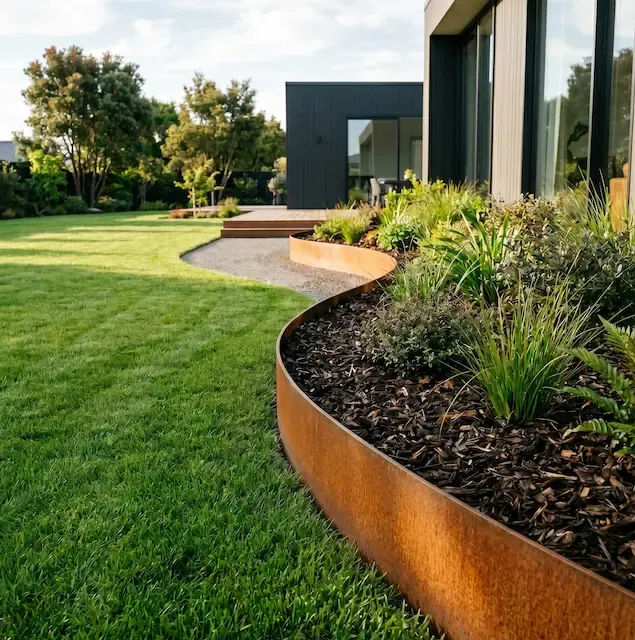
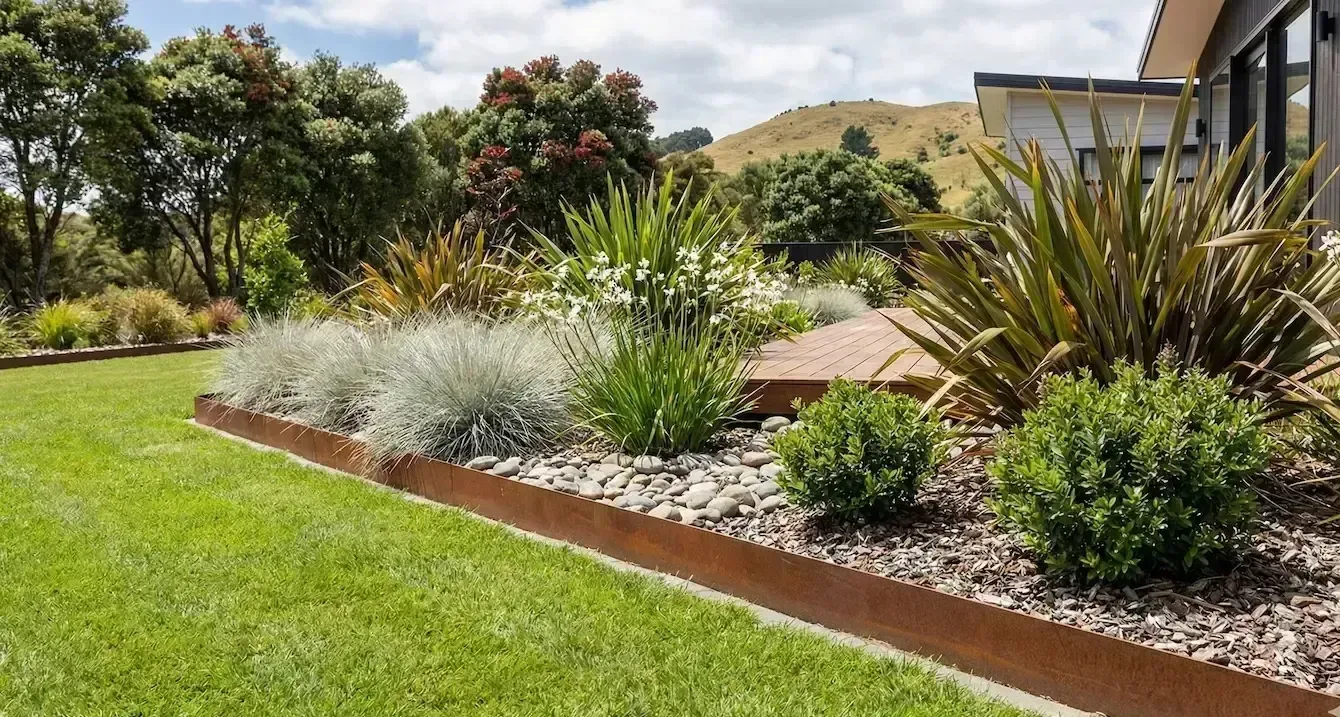
- Cor-Ten (Weathering) Steel: Formulated to develop a protective outer layer of natural rust (patina) when exposed to the elements. This surface rust acts as a shield, preventing deeper corrosion while delivering a rich, earthy aesthetic favoured by modern landscape designers.
Because steel does not absorb water, it maintains its structural integrity regardless of soil conditions or seasonal weather swings.
Installation Effort: Weekend DIY Project Vs. Ongoing Labour
The Physical Reality Of Installing Timber Edging
Installing timber edging requires significant manual labour. Because wooden edging boards are thick (typically 25mm to 50mm), you must dig deep, wide trenches to sit the wood flush with the turf line.
To secure timber edging properly, you must:
- Dig heavy trenches along the entire garden perimeter.
- Cut heavy timber lengths using a hand saw or circular saw.
- Drive wooden supporting stakes deep into the ground every metre.
- Fasten the boards to the stakes using galvanised screws.
If your garden has gentle curves or circular tree surrounds, working with rigid timber becomes frustrating. Achieving smooth curves with wood requires kerf-cutting (making multiple saw cuts on one side of the board) or using thin, flimsy timber flexi-boards that rot even faster than standard timber.
Tap-In Simplicity: Installing Interlocking Steel Edging
In contrast,
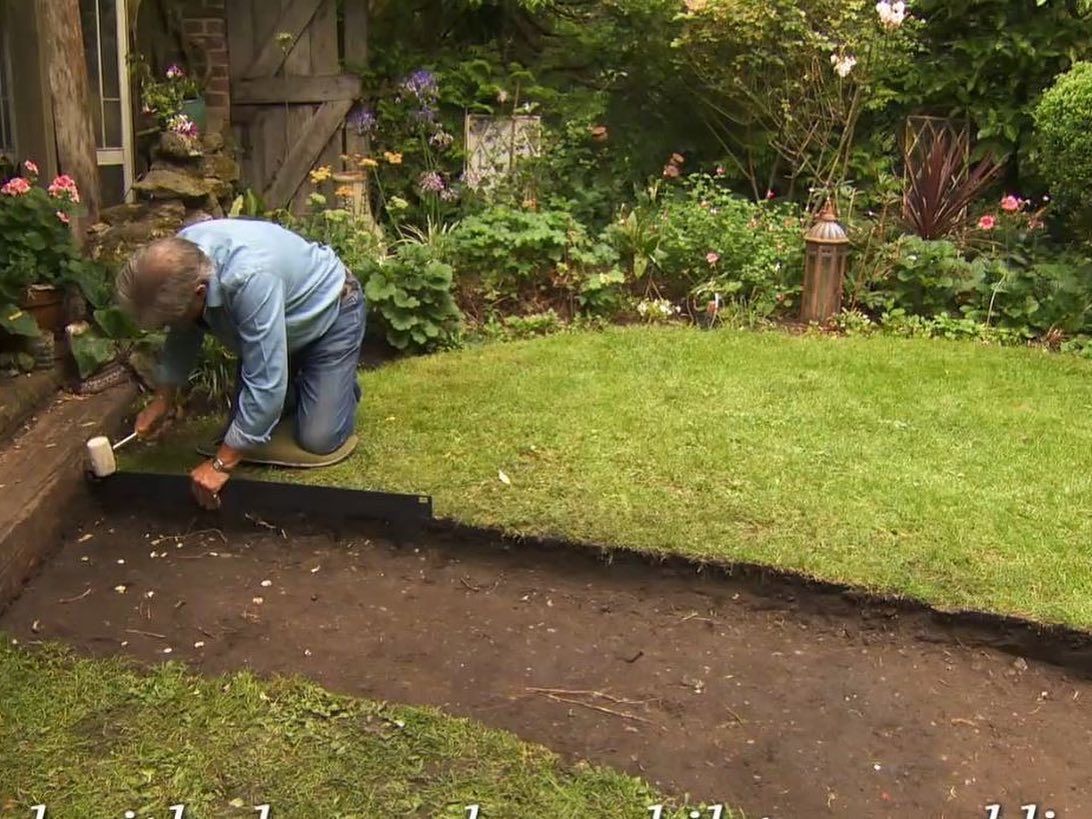
Classic Steel Garden Edging is designed for rapid, low-impact installation. The slim 1.6mm steel profile cuts cleanly into soil without requiring deep excavation.
The installation process involves four straightforward steps:
- Slice a guide line into the turf using a standard spade.
- Connect the 1-metre steel lengths using the simple interlocking tab system.
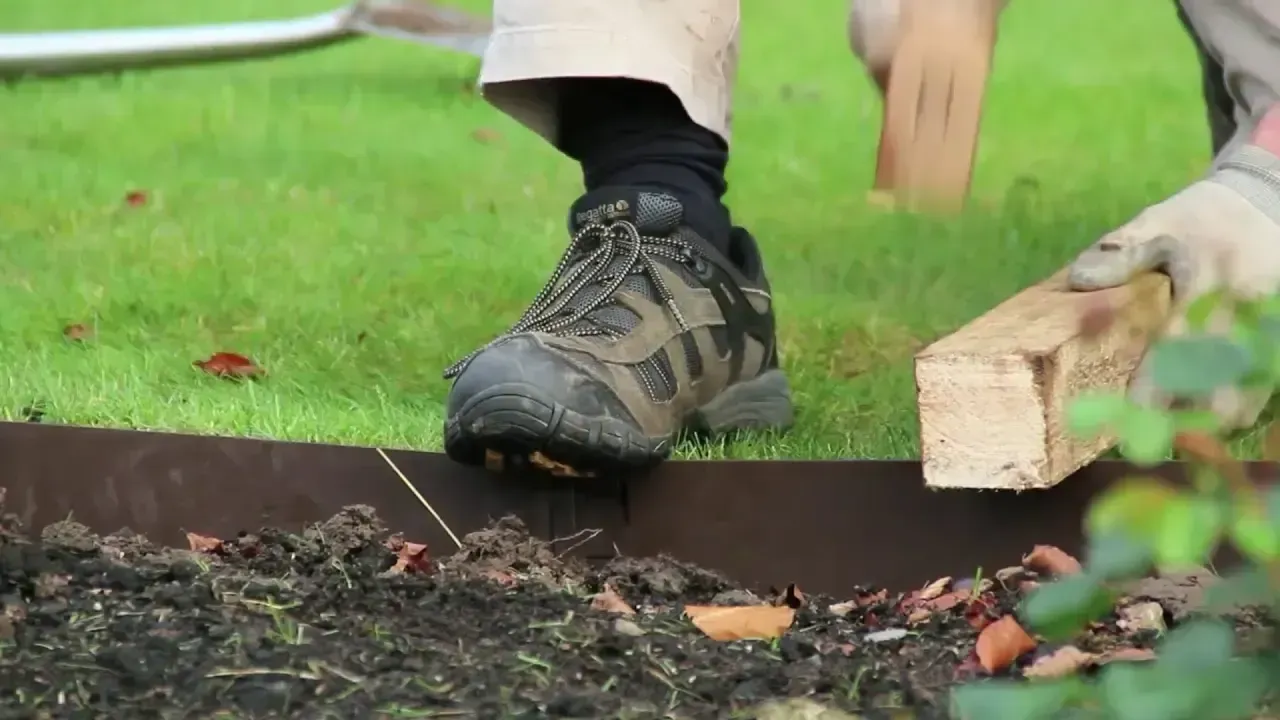
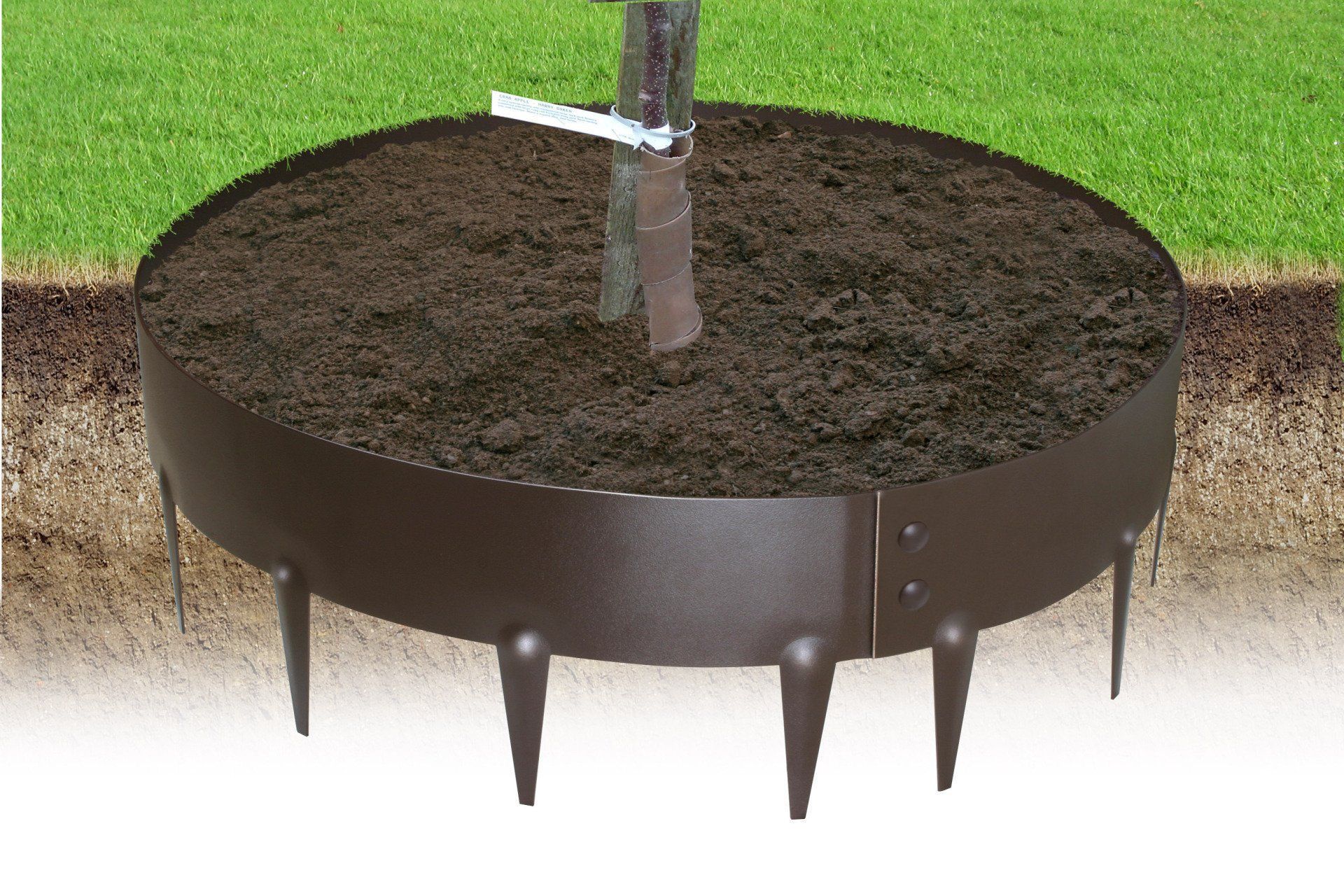
- Tap the built-in steel ground spikes straight into the soil with a rubber mallet.
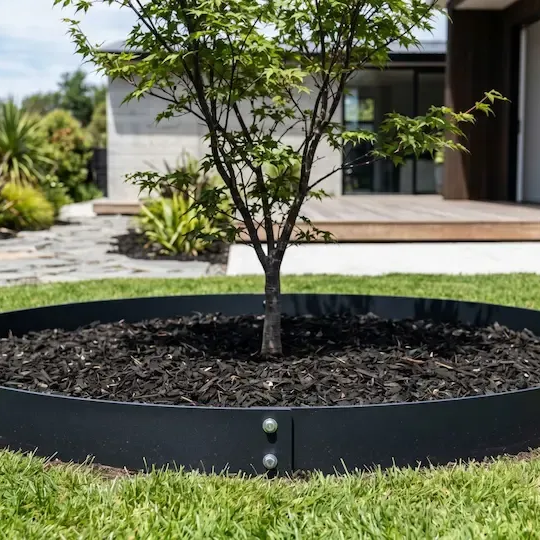
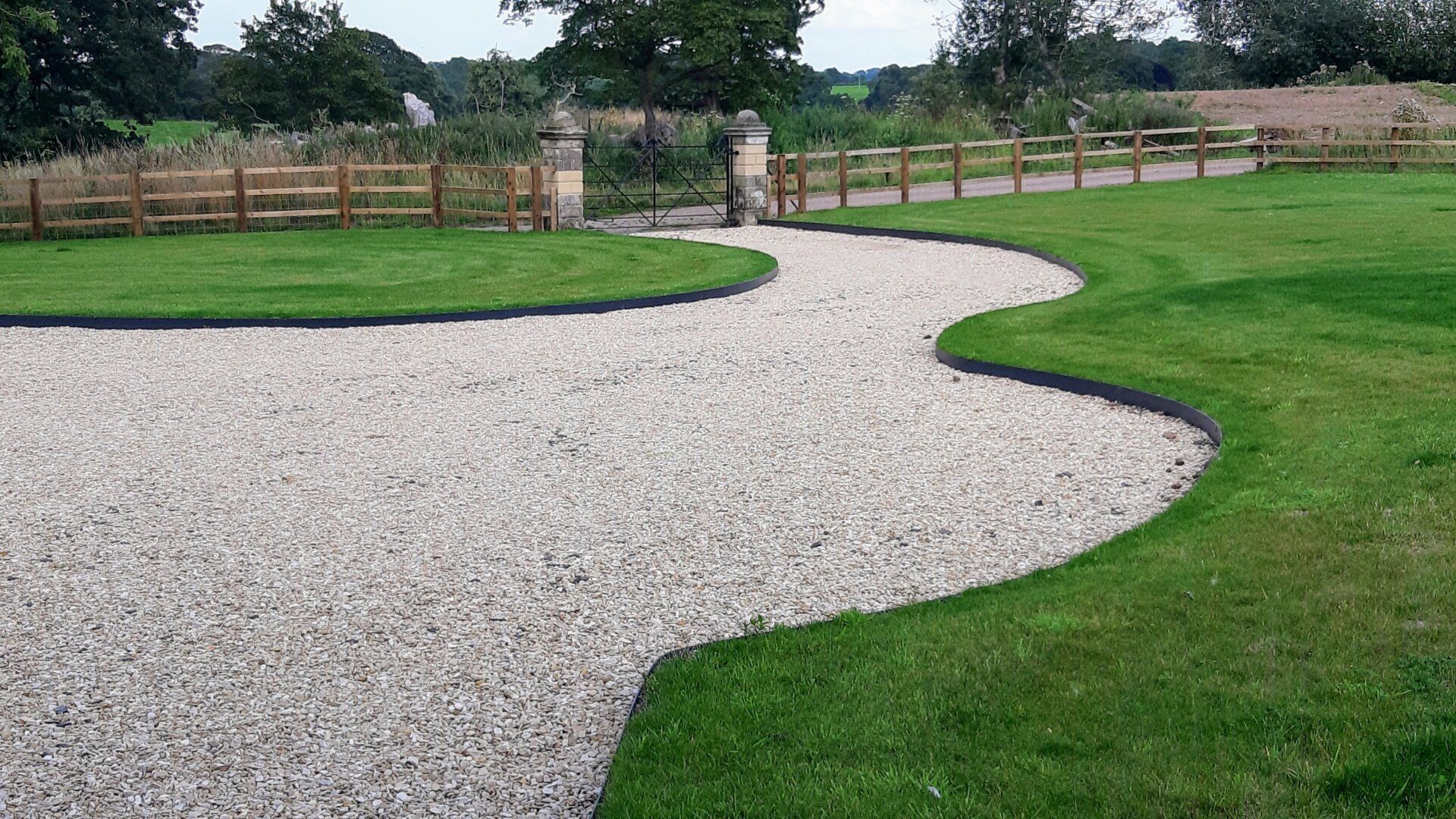
- Bend the flexible steel by hand to follow any curve, angle, or tree circle seamlessly.